
AFL Betting in New Zealand: What the Season Actually Costs Punters
 Available in US
Current as of 26 October 2026. Cross-checked against the Racing Industry Act 2020 (as amended in 2025) and TAB NZ’s own published terms.
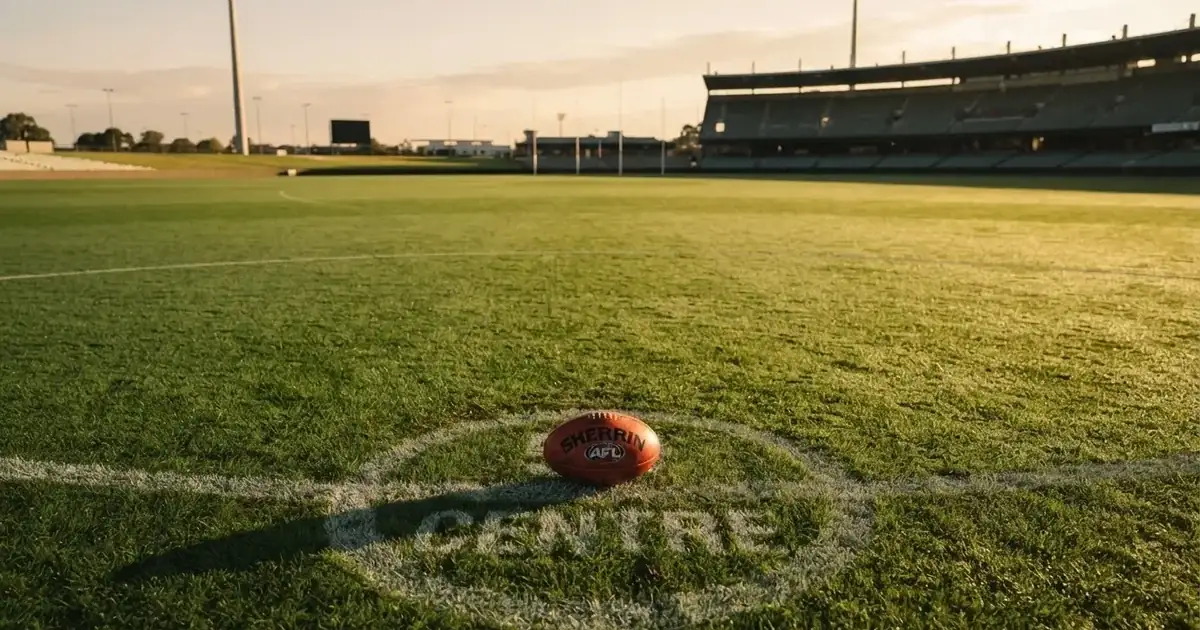
If you live in New Zealand and want to have a punt on the AFL this season, the legal landscape is simpler, and harsher, than most comparison sites let on. Only one operator group may lawfully offer racing and sports betting to people in New Zealand, and the entire offshore-allowed industry that ranks AFL sites on global lists has no standing here. That is the frame this page starts from. Everything below sits inside it: what you can bet on, what odds look like, what the season structure costs you in turnover, and what every offer on the table is really worth.
Table of Contents
- How odds are calculated and what the bookmaker keeps
- Settling a bet: singles, multis, and the same-game multi
- What the AFL season looks like and what it costs to bet through
- The New Zealand landscape: who may lawfully take your bet
- Regulation, oversight and the gambling rules behind TAB NZ
- Responsible gambling tools and where to get help
- Bonuses and free bets: what the marketing words cost
- Best bets and strategy: where the analysis earns its keep
- The reviewed bookmakers for AFL betting in New Zealand
- Tax and what winning costs in real money
- Advertising rules and what the page will not include
- Frequently asked questions
How odds are calculated and what the bookmaker keeps
Decimal odds look like they answer one question, “what does a winning bet pay back?” They answer two. The visible one: a $100 bet at 1.90 returns $190 ($90 profit). The hidden one sits inside the numbers themselves, and it is the reason two bookmakers never offer identical odds on the same match.

Take a two-way market priced at 1.90 / 1.90. The implied probability of each side is 1 ÷ 1.90, or roughly 52.6%. Two sides add to 105.3%. That extra 5.3% is the bookmaker’s margin, the slice of every dollar wagered on this market that the operator keeps on average. It is sometimes called the overround, sometimes called juice, and it is the difference between a fair book (where both sides add to exactly 100%) and a real book (where they always add to more). The payout share, what gets returned to bettors in aggregate, is 100% minus that margin.
The arithmetic belongs to anyone who wants to check it: payout share = 1 ÷ (1/odds₁ + 1/odds₂ + …) for all outcomes of one market, and margin = 1 − payout share. At 1.90 / 1.90, the payout share is 95.0% and the margin sits at 5.0%. State it as a band rather than a point estimate, because real AFL markets rarely present two perfectly even sides, and once one shifts to 1.85 and the other to 1.95 the margin drops to roughly 4.3% — different market, different number.
This matters more than the headline odds suggest. A market with a 3% margin and a market with a 7% margin look similar on a betting slip; over a season of 24 home-and-away matches plus finals, the cheaper market returns roughly four percentage points more of every dollar wagered. The margins in major AFL markets at TAB NZ and offshore operators cluster between 4% and 8% depending on the bet type and how close to the bounce the price was set.
Settling a bet: singles, multis, and the same-game multi
Every bet type in AFL collapses into one of three forms: the single (one selection, one price), the multi (two or more selections whose prices multiply into one combined price), and the same-game multi, a multi whose legs all come from one match.

A single at 2.10 on $50 returns $105 if the team wins. A two-leg multi at 1.80 × 1.95, stake $50, returns $50 × 3.51 = $175.50 only if both legs win. Each leg multiplies, and each leg multiplies the bookmaker’s margin into the price. The combined margin of a multi is always higher than the margin of any single leg, which is why multis are priced to look attractive: the apparent payout is larger, but the slice the operator keeps on each leg compounds.
The same-game multi takes this further. Picking head-to-head, total points, and first goalscorer from one match is a popular form because the legs are correlated (a blowout makes both the margin and the first-goalscorer easier to call), and correlated legs are harder to price. TAB NZ and Betcha both carry same-game multis on marquee AFL matches. The bettor’s trade-off is real correlation against compounded margin.
What the AFL season looks like and what it costs to bet through
The AFL has 18 teams competing in any given season, with Tasmania due to come in as the 19th from 2028. The fixture runs as a 24-match home-and-away season, usually March to September, followed by a five-round finals series. The grand final sits at the MCG each year, with rare exceptions such as 2020 and 2021 when it was played outside Victoria.
Scoring rewards goals strongly. A goal scores six points, a behind scores one. A final score of 18.14 (122) to 11.9 (75), the Brisbane Lions beating Geelong in the 2025 grand final, is a typical attacking total: 18 goals and 14 behinds adds to 122. Markets settle on these numbers directly: line betting moves in increments of the point, total points markets cluster around the 160 mark at the MCG, and first-goalscorer markets settle on whichever player kicks the first major. Behind-heavy scores are common in wet weather and at smaller grounds, which matters when you handicap a total.
The 2025 grand final and the 2026 grand final tell two different stories. In 2025, Brisbane beat Geelong 18.14 (122) to 11.9 (75) on 27 September 2025. The 2026 season opened on 5 March 2026 and closed with Brisbane defeating Fremantle by seven points in the grand final, a third consecutive premiership. Pre-finals futures markets might have paid for a Brisbane flag both years. Carlton, Collingwood and Essendon share the all-time premiership record at 16 each. None of this tells you who wins next year, but it tells you what futures pricing reflects: bookmakers weight recent form strongly, and Brisbane’s run was visible in the early-season market.
A full season is 24 home-and-away matches per team plus four weeks of finals. For a punter betting one head-to-head selection per round at an average stake of $20, the season turnover is $560 before finals. That number is the base for understanding any bonus offer: a free bet worth $50 looks generous until you realise it is roughly 9% of one punter’s weekly turnover, and a bonus with a turnover requirement of 6× the deposit multiplies the same $560 by a factor that changes the offer’s real cost.
The New Zealand landscape: who may lawfully take your bet
Since 28 June 2025, the answer has been short. Section 74AAA of the Racing Industry Act 2020, inserted by the Racing Industry Amendment Act 2025, prohibits any person other than TAB NZ from offering racing betting, sports betting or other racing or sports betting to a person in New Zealand, regardless of where that operator is resident or incorporated. The Department of Internal Affairs told unlicensed providers to withdraw with immediate effect.
TAB NZ runs two online brands, TAB and Betcha, both under the TAB New Zealand umbrella. They are not rivals: they are two apps from one operator group, with Entain operating the business under a 25-year deal signed in 2023 that gives Entain a 50/50 share of gross profits, with at least $150m a year going to TAB NZ for the first five years, and Entain pledging a one-off $100m payment to the racing sector. Treat them as one operator and pick the app that suits you.
Other brands that New Zealand players encounter online, the international sportsbooks that rank globally, hold no New Zealand licence. Telbet, BetNinja, Golden Panda, RTbet, 22Bet, Rabona, LegendPlay and BetAlright all operate offshore. Several name a Curaçao licence (RTbet, 22Bet, Rabona); one names an Anjouan licence (LegendPlay); one names a Union of the Comoros licence (BetNinja); others name no licence at all (Telbet, Golden Panda, BetAlright). None of these has any lawful status here, and the Department of Internal Affairs has stated that taking such bets is a breach of section 74AAA by the operator. The page covers them anyway, because New Zealanders meet them, and the comparison needs to be honest about what each one is.
What that gap costs the player is not a fine (section 19(4) of the Gambling Act 2003, inserted in 2025, says an individual may not be convicted for placing a bet with an offshore betting operator in breach of section 74AAA; no published penalty for a player was found). It is the absence of every layer of protection New Zealand law puts around TAB NZ: no New Zealand complaints route, no guaranteed payout, no harm-minimisation framework that reaches you, no recourse if an offshore operator declines to return unspent credits or pay out a large win. The Department of Internal Affairs lists these risks publicly. That is the trade, and it is the trade for every offshore account a New Zealand resident opens.
Regulation, oversight and the gambling rules behind TAB NZ
The Department of Internal Affairs is the gambling regulator under the Gambling Act 2003 and monitors compliance with the betting prohibition. The Gambling Commission sits beneath it as the body that hears certain licence-related objections for land-based casinos; it does not regulate sports betting, which falls under the DIA. The Racing Industry Act 2020 is the betting-side statute, and the 2025 amendment inserted section 74AAA; the Online Casino Gambling Act 2026 covers online casinos only, not sports betting, and TAB NZ winning the right to apply for a casino licence does not extend the betting monopoly.
TAB NZ is a statutory corporation. It must keep the risks of problem and underage gambling minimised, and pays a Problem Gambling Levy of 0.74% (in force from 1 July 2025 to 30 June 2028). The levy funds treatment services and research, and it is the only direct contribution TAB NZ makes to harm-minimisation that is fixed by law rather than set by the operator.
Betting under 18 is an offence under section 89 of the Racing Industry Act 2020. TAB NZ’s apps carry a 17+ age rating on the App Store while stating that customers must be 18 or over to bet. Land-based casinos are 20 — never the two ages, since one is the betting floor and the other is the casino floor, and they sit on separate permits. TAB NZ accounts require a verified New Zealand address and ID at sign-up, which is also the moment a self-exclusion or a deposit limit can be set.
What may be bet on: racing and sports betting from TAB NZ only. TAB NZ takes fixed-odds and tote (pool) bets, and its published betting rules cover Win, Place, Each Way, Quinella, Exacta, Trifecta, First Four, Double, Treble, Daily Double, Running Double, Quaddie, Big6, Multis and Same Game Multis. Live betting is listed in the TAB NZ apps. No statutory restriction on in-play markets is established. No lawful New Zealand betting exchange exists, and spread betting sits outside TAB NZ’s sports-betting definition; write nothing about a New Zealand exchange. Bets on politics and novelty markets are not established, and esports is not classified in either settled provision. From 1 August 2026, greyhound racing is closing in stages and offshore operators may not take bets on greyhound races from that date.
Responsible gambling tools and where to get help
TAB NZ lists deposit limits, time-outs and self-exclusion in its apps, and an exclusion applies across both TAB and Betcha. These are operator-level tools set by TAB NZ; there is no single national online-betting exclusion register. The register the 2026 casino law will require is for online casinos only.
The free Gambling Helpline (0800 654 655, text 8006) and Safer Gambling Aotearoa sit beside the in-app tools. The helpline is a service for anyone affected by gambling harm, in New Zealand or supporting someone who is. Setting a deposit limit before a season opens, the moment the first match kicks off, is the cheap, reversible option. Self-exclusion is the heavier tool and the one a punter might use if limits do not hold.
Offshore operators offer no equivalent layer. Their safer-gambling pages vary in quality and none of them is tied into the New Zealand helpline or the Problem Gambling Levy. That absence is the practical cost of choosing an offshore account: no New Zealand complaints route, no harm-minimisation framework that reaches you, and an operator whose stated safer-gambling tools do not have to meet the standards TAB NZ meets.
Bonuses and free bets: what the marketing words cost
TAB NZ runs bonus-bet promotions, and the same gap shows up on every offer: the headline number and the real cost are different things, and the difference sits in turnover requirements, minimum odds, deadlines and caps on free-bet winnings.
A free bet whose stake is not returned with a win is worth less than its face value. The expected value of a $50 free bet at odds 2.50, on a market with a 5% margin, is $50 × (2.50 − 1) ÷ 2.50 × 0.95, or roughly $28.50. The marketing word “free” survives; the arithmetic does not.
A cash bonus with a 6× turnover requirement on the bonus amount means a punter has to wager $300 to clear a $50 bonus. At an average stake of $20, that is fifteen bets, and the cost of clearing the bonus is the expected loss on those fifteen bets: roughly $300 × 5%, or $15, against a $50 headline. The bonus is positive value on average, but only if the punter might have bet anyway; if the turnover requirement draws in bets that might not otherwise have been placed, the expected cost rises.
The price minimum matters. A turnover requirement that excludes bets at odds shorter than 1.50 forces the punter into markets with higher margins and higher variance. A cap on free-bet winnings (a common $200 cap on a $50 free bet, for instance) clips the upside while leaving the downside unchanged: a 10.0 shot that wins still pays $500, but the punter collects $200 and the rest is forfeit.
The deadline bonus comes last. A seven-day expiry on a free bet does not change its expected value if the punter bets it within the window. A seven-day expiry on a bonus that requires thirty days of qualifying bets collapses the offer, because the punter cannot complete the turnover in time. Read the small print before the headline.
TAB NZ’s bonus-bet terms sit on its promotions page; check them there. Offshore operators vary wildly, and the same brand can carry different terms in different jurisdictions. Where the marketing says “risk-free”, what it usually means is “refunded as a free bet if your first bet loses”, and the refund carries the same turnover and minimum-odds rules a bonus carries.
Best bets and strategy: where the analysis earns its keep
The phrase “best bets” is what a punter searches when a round is close; what the search returns is rarely analysis. The mechanics of a sharp bet are three: a market with a margin the punter can live with, a price that reflects a real probability edge rather than the bookmaker’s line, and a stake sized to the edge rather than the headline.
The bookmaker’s margin sets the floor. A market with a 7% margin demands a 7% edge before a bet is positive expected value. AFL head-to-head markets at TAB NZ carry lower margins than exotic markets (first goalscorer, margin bands, quarter-by-quarter lines) because the head-to-head is the most-bet market and the most efficient. Exotics carry higher margins because fewer punters price them.
The price reflects probability. A line of 1.85 on the favourite implies 54.1%; if the punter’s model says 58%, the edge is 3.9 percentage points and the bet is +EV at any reasonable margin. If the model says 55%, the edge is under 1% and the margin eats it. The arithmetic is unforgiving.
The stake sizes to the edge. A common staking model (level stakes) puts the same amount on every selection regardless of the price. A Kelly-style model scales the stake to the edge: bigger edge, bigger stake. The Kelly version wins more on the bets that win and loses more on the bets that lose; level staking smooths the variance. The choice is a punter’s call about how much drawdown they can stomach.
Statistics worth knowing: a team covering a 1–39 point line in the AFL wins roughly 57 percent of the time at most books, and lines shift in increments of half a point as money comes in. A team favoured by 40-plus wins roughly 85% of the time, but the price is short and the margin on the favourite eats most of the edge. Same-game multis correlate their legs in ways singles do not: a team winning by 40 makes both the margin and the total points legs easier to hit at the same time.
No system wins. Anyone selling a “sure” bet, a “lock”, or a “guaranteed system” is selling a fiction. The math above is an average over many bets, not a prediction of the next one. A punter who acts on a tip from a stranger on the internet loses real money on that stranger’s word.
The reviewed bookmakers for AFL betting in New Zealand
What follows is a description and judgement of each operator a New Zealand punter meets, not a recommendation. TAB and Betcha sit first because they are the only lawful option. The offshore brands sit after, with their standing under New Zealand law stated plainly. Treat each one as a different trade: a different operator, a different licence (or none), a different cost.
| Brand | New Zealand status | Terms & protection |
|---|---|---|
| TAB | TAB NZ brand | Lawful operator; New Zealand protections apply |
| Betcha | TAB NZ brand | Lawful operator; New Zealand protections apply |
| Telbet | Not licensed | Offshore; no New Zealand protection |
| BetNinja | Not licensed | Offshore; no New Zealand protection |
| Golden Panda | Not licensed | Offshore; no New Zealand protection |
| RTbet | Not licensed | Offshore; no New Zealand protection |
| 22Bet | Not licensed | Offshore; no New Zealand protection |
| Rabona | Not licensed | Offshore; no New Zealand protection |
| LegendPlay | Not licensed | Offshore; no New Zealand protection |
| BetAlright | Not licensed | Offshore; no New Zealand protection |
TAB
TAB is one of two online brands of TAB NZ, the only provider lawfully offering racing and sports betting to people in New Zealand under section 74AAA of the Racing Industry Act 2020. The site is operated by Entab under a 25-year partnership signed in 2023, with at least $150m a year flowing back to TAB NZ for the first five years. TAB is also a retail outlet: the shops on street corners throughout the country, where the staff know the codes and the betting slip is paper.
The TAB app carries racing (horse, harness, and greyhound until greyhound racing closes in stages from 1 August 2026), rugby union and rugby league, and other sports including AFL. Pre-match and live markets are both available. The app includes Trackside live race streaming with in-app betting, racing form, Blackbook and Jockey Challenge tools, and a simplified wallet for deposits and withdrawals. The App Store listing gives a 17+ age rating while stating customers must be 18 or over to bet; the difference reflects the store’s age bands, not the betting age.
TAB’s safer-gambling tools are deposit limits, time-outs and self-exclusion, and exclusions apply across both TAB and Betcha. The free Gambling Helpline (0800 654 655, text 8006) and Safer Gambling Aotearoa are listed in the app. TAB NZ pays a Problem Gambling Levy of 0.74% and must meet harm-minimisation standards set by statute.
For AFL, TAB carries head-to-head, line, total points, first goalscorer, quarter and half markets, and same-game multis on marquee matches. The margins are tight on the head-to-head and wider on the exotics, and the prices are quoted in decimal form ($1.90, $2.50, and so on). There is no published per-bet cap; limits are operator-level and set in the terms.
The verdict is straightforward. TAB is the only place a New Zealand punter can bet on AFL with the full backing of New Zealand law behind them, and the only one with a verified New Zealand complaints route, a New Zealand harm-minimisation framework, and a regulator watching the operator’s compliance. If the choice is between TAB and an offshore brand, the difference is not the odds or the offer; it is what happens when something goes wrong.
Betcha
Betcha is the second online brand of TAB NZ, sitting alongside TAB under the same TAB New Zealand umbrella. Entab New Zealand Limited publishes it on the New Zealand App Store; the app was first released on 6 August 2024. Same operator group, same statutory standing, different app.
Betcha carries racing and sports, including AFL, with a streamlined interface aimed at a younger demographic than TAB’s traditional retail base. The markets are the same set TAB offers (head-to-head, totals, lines, first goalscorer, multis and same-game multis), and the prices might sit close to TAB’s because the operator is the same and the line moves in step.
For a punter choosing between TAB and Betcha, the practical differences are the app and the in-app experience. Betcha’s interface is the newer design. TAB’s interface is the older one with the longer history of feature updates. The pricing, the safer-gambling tools, and the New Zealand legal standing are identical. The punter who wants the broader feature set (Trackside streaming, Blackbook, Jockey Challenge) goes to TAB; the punter who wants the simpler betting flow goes to Betcha.
The verdict is the same as TAB’s, because they are the same operator. Betcha is one of two lawful ways to bet on AFL from New Zealand.
Telbet
Telbet describes itself as a crypto casino and sportsbook, with a welcome offer of 200% up to 1 BTC plus 50 free spins and a 5 USDT free bet on its Russian-language site. The brand names no licence that applies in New Zealand, which means it has no standing under section 74AAA of the Racing Industry Act 2020. This puts it in the same offshore standing as every other foreign brand on this page: no lawful right to serve New Zealand, no New Zealand complaints route, and no New Zealand harm-minimisation framework.
For a New Zealand punter, Telbet is an offshore crypto-crypto bookmaker with no New Zealand protection. If a large win is declined, the recourse is whatever international channels the brand’s terms name. The risk that DIA warns about (no return of unspent credits, no payout of large wins) is the risk this brand carries by default.
The verdict is that Telbet does not belong in a New Zealand punter’s account list. The brand offers AFL markets and crypto rails, both common features for offshore brands; neither turns it into a New Zealand operator.
BetNinja
BetNinja advertises a casino welcome of EUR 1,000 bonus and 100 free spins, and a sports offer of a 100% match up to EUR 100 on the first deposit. The brand names a Union of the Comoros licence, which gives no right to take bets from people in New Zealand. It sits in the same offshore standing as every other foreign brand on this page: no lawful right to serve New Zealand, no New Zealand complaints route, and no New Zealand harm-minimisation framework.
The Comoros licence is one of the lower-bar offshore licences; it gives the brand a number to print but does not impose the consumer protection or dispute resolution standards a European or Australian licence does. For a New Zealand punter, the trade is the same as every offshore brand: the offer is large, the protection is thin.
The verdict is that BetNinja’s headline offer is in line with what offshore books advertise, and the protection is in line with what offshore books provide. A New Zealand punter has no reason to choose it over TAB.
Golden Panda
Golden Panda offers a Sports section with a sportsbook, esports and virtual sports, plus casino, live casino, crash games, rewards, cashback, a VIP Club, Golden Goals and Prediction Markets. The brand names no licence that applies in New Zealand. The site’s sportsbook is broader than some offshore brands, and the prediction-markets feature is a separate product line sitting beside the sportsbook.
The protection story is the same as every other offshore brand on this page: no New Zealand standing, no complaints route, and no harm-minimisation framework. The breadth of products does not change this status.
The verdict is that Golden Panda is a broad offshore product where the breadth is the marketing pitch and the protection is the standard offshore floor. A New Zealand punter does not gain anything by choosing it over TAB.
RTbet
RTbet’s sportsbook covers football, tennis, table tennis, basketball, ice hockey, American football and baseball, with live betting and virtual sports. The brand names a Curaçao licence, which is invalid here. The Curaçao licence is the common offshore licence; it gives the brand a number to print, with limited consumer protection compared with European or Australian regimes.
AFL is not in the listed sports, which means RTbet’s Australian-rules coverage is either absent or buried under another label. A New Zealand punter looking specifically for AFL might check the site’s Wettprogramm before opening an account, and the absence of an explicit AFL listing is worth noting.
22Bet
22Bet offers over 30 market types per event, including 1X2, Double Chance, totals, both teams to score, correct score and HT-FT, plus tennis game, set and handicap markets. The brand names a Curaçao licence (8048/JAZ), holder TechSolutions Group N.V., which gives no right to take bets from people in New Zealand.
22Bet’s market breadth is its pitch: 30+ markets per match is wider than what TAB NZ offers on every fixture. The trade is breadth against protection. A New Zealand punter who wants the exotic markets (correct score, both teams to score, half-time/full-time) and accepts the offshore standing may use 22Bet; a punter who wants the New Zealand standing uses TAB.
The verdict is that 22Bet’s market depth is real and its New Zealand standing is what it is. The two facts do not contradict each other; they sit side by side.
Rabona
Rabona launched on 23 December 2019 as the sixth online sportsbook of the Soft2Bet group. The site carries the Soft2Bet group’s standard sportsbook product, with the broader group’s casino and live casino attached.
For a New Zealand punter, Rabona is one Soft2Bet brand of many, and the agreement might be read across the group’s other brands. The protection story is the Curaçao floor: real, but not equivalent to a European or Australian licence.
The verdict is that Rabona is a standard offshore sportsbook from a known group, and the group’s size does not extend its standing into New Zealand.
LegendPlay
LegendPlay’s sportsbook has Sports, Live Betting and Virtual Sports sections, with football, tennis, basketball and ice hockey listed. The brand names an Anjouan Gaming Authority licence, which gives no right to take bets from people in New Zealand. Anjouan is one of the lower-bar offshore licences; the consumer protection and dispute resolution standards are thinner than Curaçao’s.
AFL is not in the listed sports, which limits LegendPlay’s relevance to a New Zealand punter specifically looking for Australian rules.
BetAlright
BetAlright’s sportsbook covers football, tennis, table tennis, basketball, ice hockey, American football and baseball, with Live Betting and Virtual Sports sections. The brand names no licence that applies in New Zealand, which puts it in the same offshore standing as every other foreign brand on this page: no lawful right to serve New Zealand, no New Zealand complaints route, and no New Zealand harm-minimisation framework.
For a New Zealand punter, BetAlright is one more offshore brand with the same trade as every other offshore brand on this page. The site’s markets are broad; the protection is the offshore floor.
The verdict is that BetAlright does not extend a New Zealand punter’s options in any way that the lawful option does not already cover, and the standard offshore caveats apply.
Tax and what winning costs in real money
For the player, Inland Revenue guidance says recreational gambling winnings are generally not taxable, and prize money from TAB horse, dog and trotting races is not taxable. A person who bets as a business is a different case — general information, not tax advice; consult Inland Revenue or an accountant.
On the operator side, TAB NZ pays the Problem Gambling Levy (0.74%); overseas operators supplying New Zealand residents pay online gambling duty (12% of profits since 1 July 2024, rising to 16% from 1 January 2027). A duty being payable does not make an offer lawful under section 74AAA — never write that tax payment shows a bookmaker is legal. The point-of-consumption charge on offshore racing and sports bets ceased on 30 June 2026.
What this means in practice: a winning AFL bet at TAB NZ pays the full decimal price with no tax withheld, and the punter keeps the whole return. A winning bet at an offshore brand is the same for the player (no player-side tax in New Zealand), but the operator side sits in a different regime.
Advertising rules and what the page will not include
The Advertising Standards Authority’s Gambling Advertising Code applies to betting advertisements in New Zealand: ads must not target children (under 14) or young people (14 to under 18), judged by context, appeal and expected audience (25% or more of the audience counts as significant where accurate data exists); must not encourage harm; and must be truthful with terms available. No New Zealand equivalent of a “whistle-to-whistle” ban for betting was found.
The page describes offers qualitatively rather than printing a working bonus, promo or voucher code. The reason is editorial: this page describes what an offer is worth, not how to claim it. Promotional codes are a marketing layer that ages fast and adds nothing to the analysis. Where a punter wants a current code, the operator’s own promotions page is the source.
Frequently asked questions
Which bookmaker may lawfully take sports and racing bets in New Zealand?
Since 28 June 2025, only TAB NZ may offer racing and sports betting to people in New Zealand, under section 74AAA of the Racing Industry Act 2020. TAB NZ runs two online brands, TAB and Betcha, both operated by Entain under a long-term partnership; they are not rivals. Any offshore bookmaker taking bets from a person in New Zealand is in breach of section 74AAA by the operator. The Department of Internal Affairs monitors compliance.
How is the return on a bet worked out from the stake and the odds?
Decimal odds are the form used in New Zealand: a stake multiplied by the odds gives the total return, and the odds minus one, multiplied by the stake, gives the net profit. A $50 stake at 2.10 returns $105 ($55 profit); the same stake at 1.90 returns $95 ($45 profit). For a multi, the odds of each leg multiply into one combined price before the stake is applied. The stake is returned with a win unless the bet is a free bet, in which case only the profit is paid.
What is the bookmaker’s margin and how can it be seen in the odds?
The margin is the slice of every dollar wagered on a market that the bookmaker keeps on average. It is the percentage by which the implied probabilities of all outcomes exceed 100%. A market priced at 1.90 / 1.90 has implied probabilities of 52.6% on each side, summing to 105.0%; the extra 5.0% is the margin, and the payout share is 95.0%. Wider margins show up in exotic markets (first goalscorer, margin bands, quarter lines) and in markets priced closer to the bounce.
What does a player lose by betting with a bookmaker that has no New Zealand licence?
No New Zealand complaints route, no New Zealand harm-minimisation framework that reaches the account, no guaranteed payout if the operator declines to pay, and no obligation on the operator to return unspent credits. Section 19(4) of the Gambling Act 2003 (inserted in 2025) says an individual may not be convicted for placing a bet with an offshore operator in breach of section 74AAA; no published penalty for a player was found. The trade is the absence of protection in exchange for whatever the offshore brand offers that TAB NZ does not.
From what age can bets be placed with TAB NZ, and what is checked when opening an account?
Eighteen. Betting under 18 is an offence under section 89 of the Racing Industry Act 2020. TAB NZ’s apps carry a 17+ age rating on the App Store while stating customers must be 18 or over to bet. Land-based casinos are 20; the two ages sit on separate permits and must not be merged. Opening an account requires a verified New Zealand address and ID, which is also when a deposit limit, a time-out, or a self-exclusion can be set.
Are betting winnings taxed in New Zealand?
Recreational gambling winnings are generally not taxable, and prize money from TAB horse, dog and trotting races is not taxable. A person who bets as a business is a different case. This is general information, not tax advice; consult Inland Revenue or an accountant for a position that applies to a specific situation. On the operator side, TAB NZ pays the Problem Gambling Levy (0.74%) and overseas operators supplying New Zealand residents pay online gambling duty (12% of profits since 1 July 2024, rising to 16% from 1 January 2027), but operator-side duty does not make an offer lawful under section 74AAA.
Published by the Nzgridironbets team.