Greyhounds betting in New Zealand 2026: who can still take your bet
 Available in US
The greyhound racing industry in New Zealand is winding down under the Act, and the law on who may take a bet is tighter than the sport itself. Since 28 June 2025 only one operator group may lawfully offer racing and sports betting to a person in New Zealand, regardless of where that operator is incorporated. This page is a working guide for anyone still betting on greyhounds in New Zealand: where the wager can lawfully be placed, how the racing code is closing, what the odds represent, and what changes from 1 August 2026 when the last meetings run and the offshore bookmakers lose their right to price them.
Current as of 26 October 2026 · verified against TAB NZ and Entain New Zealand public statements and the New Zealand Racing Industry Act 2020 as amended.
Table of Contents
- Greyhound racing in New Zealand: the code and the calendar
- The Top 10 greyhound bookmakers for New Zealand players
- What greyhound betting actually is in New Zealand
- The legal frame: section 74AAA and what it actually bans
- Responsible gambling in New Zealand
- Bet types, odds and how to read a greyhound card
- Strategy, predictions and the limits of both
- The ten brands, one at a time
- The arithmetic of the bet
- Frequently Asked Questions
Greyhound racing in New Zealand: the code and the calendar
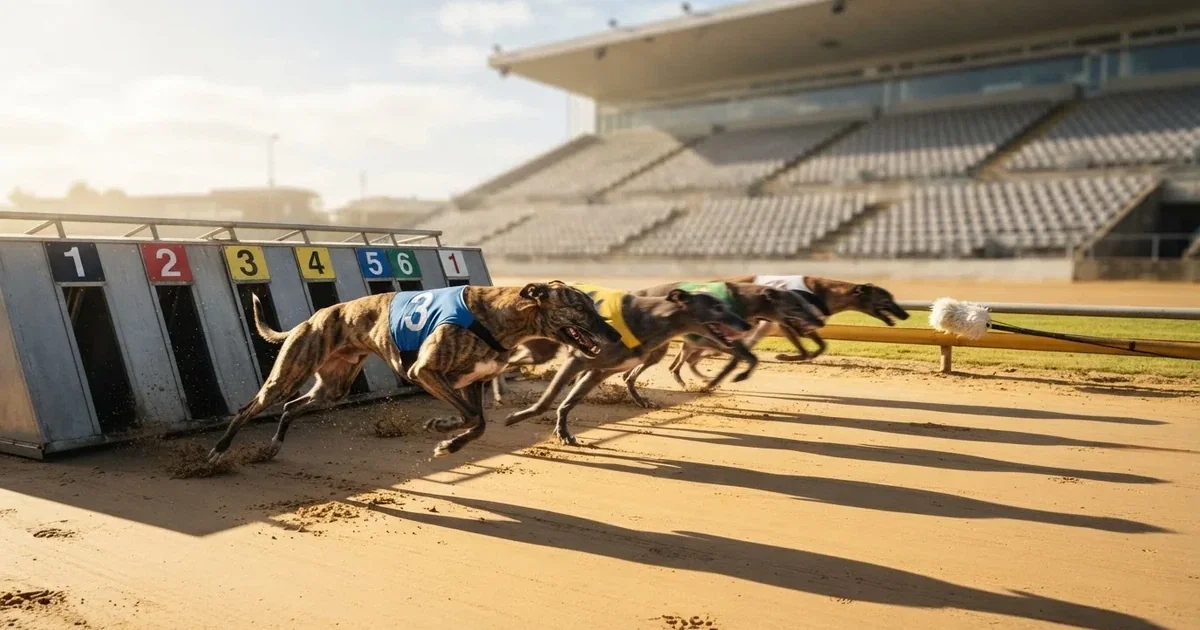
Greyhound racing in New Zealand was run by Greyhound Racing New Zealand (GRNZ) through seven affiliated clubs — Auckland, Waikato, Whanganui, Palmerston North, Canterbury, Otago and Southland. The national code sat alongside thoroughbred and harness racing, both of which continue. Greyhound meetings were contested over short sprint distances on sand or grass tracks, with six or eight runners breaking from numbered traps behind a mechanically operated artificial lure that runs along a rail ahead of the field. The dogs are chasing the lure, not each other; the format is parimutuel and fixed-odds both, and most meetings ran at night under floodlights, which is why the sport became a familiar betting product on New Zealand tote screens and the TAB app.

The product on a typical night offered Win, Place, Quinella, Exacta, Trifecta, First4, Quaddie and Big6 pools, plus fixed-odds win and place markets, same-race multis and a same-game multi where the legs came from one card. That basket of markets is the reason greyhound racing carried weight as a betting code — frequent short races, large fields, predictable form cycles.
The code is being closed. Winston Peters, then Racing Minister, announced on 10 December 2024 that greyhound racing in New Zealand was to be banned and phased out by 2026. The Racing Industry (Closure of Greyhound Racing Industry) Amendment Act 2026 passed on 2 April 2026, with a phase-out set for 1 August 2026. After that date there are no licensed GRNZ meetings, and any wager on a New Zealand greyhound race — placed in New Zealand or through an offshore bookmaker — falls outside the law’s permitted products. The section on legality below sets out what that means in practice for a punter.
The Top 10 greyhound bookmakers for New Zealand players
The comparison covers the ten brands a New Zealand-based punter is likely to meet. The first two are the online brands of TAB NZ — the sole operator lawfully providing racing and sports betting to people in New Zealand since 28 June 2025. The other eight are offshore bookmakers that meet New Zealand players through search and affiliate marketing; none of them holds a New Zealand licence, none is bound by New Zealand harm-minimisation rules, and none offers a New Zealand complaint route. They are rated by the same criteria so a reader can see their offering compared to the lawful options.

The criterion every other comparison is built on is the same: TAB NZ’s two brands are a single operator group, with shared liability, shared customer-protection framework, and a shared wallet across TAB and Betcha. The offshore brands each have their own house rules, their own licence, and their own payout practices. The table does not compare them as if they were a level field — they are not — but it does put their sportsbook range and terms side by side so the difference is plain to see.
How the ten are judged
Three things are compared: whether the brand is one of TAB NZ’s two online brands or not licensed in New Zealand; what its sportsbook covers, with greyhound markets called out where the brand offers them; and what its own published terms say on the bettor’s exposure — withdrawal time, minimum stake, bonus rules. The brands that do not list greyhound racing are named, because a New Zealand punter looking for a greyhound bookmaker needs to know the answer is no without having to register to find out.
| Brand | New Zealand status | Greyhound markets and key product terms |
|---|---|---|
| TAB | One of the two online brands of TAB NZ, the only lawful provider for racing and sports betting in New Zealand | Greyhound Win, Place, Quinella, Exacta, Trifecta, First4, Quaddie, Big6; same-game multi; fixed odds and tote; 18+ only; verified NZ address and ID |
| Betcha | One of the two online brands of TAB NZ, the only lawful provider for racing and sports betting in New Zealand | Greyhound, horse, harness racing; rugby, NRL, NBA, NFL, MMA/UFC, tennis, cricket, football, motorsports, esports; 18+ only; verified NZ address and ID |
| BetAlright | Not licensed in New Zealand | Football, tennis, table tennis, basketball, ice hockey, American football, baseball; live betting and virtual sports; no greyhound markets listed |
| FunBet | Not licensed in New Zealand | Football, ice hockey, American football, basketball, volleyball, tennis, rugby, baseball; live betting; 24/7 bookmaker service; no greyhound markets listed |
| Winz.io | Not licensed in New Zealand | Sportsbook with separate Sports Rules, Sportsbook T&C and Bonus T&C pages; bonus promotion on the sportsbook; no greyhound markets listed |
| RoyalistPlay | Not licensed in New Zealand | Live betting, sports promotions, results, schedule; football, basketball, tennis, handball, ice hockey, volleyball, table tennis, e-sports, predictions; no greyhound markets listed |
| Telbet | Not licensed in New Zealand | Crypto casino and sportsbook; welcome offer 200% up to 1 BTC plus 50 free spins and a 5 USDT free bet on its Russian-language site; no greyhound markets listed |
| Roobet | Not licensed in New Zealand | Soccer, basketball, tennis, Counter-Strike, FIFA, baseball, ice hockey, MMA, table tennis; 18+; Curaçao licence; no greyhound markets listed |
| Rooster.bet | Not licensed in New Zealand | Live, sports promotions, results, schedule, e-sports, predictions; six odds formats; no greyhound markets listed |
| LegendPlay | Not licensed in New Zealand | Sports, live betting, virtual sports; football, tennis, basketball, ice hockey; no greyhound markets listed |
The picture this table draws is the picture the rest of the page works through. The two brands that take New Zealand bets on greyhounds are the two brands TAB NZ operates. The eight offshore brands that meet New Zealand players are not licensed to do so, and seven of the eight do not list greyhound racing as a market in any case. The one that has greyhounds somewhere in its product is Telbet by way of being a broad crypto sportsbook, not by way of a New Zealand licence.
What greyhound betting actually is in New Zealand
Greyhound betting in New Zealand means a wager on the outcome of a greyhound race run by GRNZ, priced either at fixed odds (the price you take is the price you are paid) or into the TAB NZ tote (a parimutuel pool where the dividend depends on the pool size and the number of winning tickets). The racing code runs frequent short races at the seven clubs, with a card of six to twelve races on a typical meeting night. The two wagering products that interest most punters are:
- Fixed-odds win and place — the back of a single dog to finish first, or first or second in races with enough runners. The price is set when the bet is struck and does not change after that. The bookmaker keeps a margin inside every price, which is the section on odds and margin below.
- Tote and pool bets — a stake goes into a national pool alongside every other punter on the same outcome. The tote pays a dividend that depends on the size of the pool and the number of winning units. Quinella, Exacta, Trifecta, First4, Quaddie and Big6 are all tote products, with the size of the dividend determined after the last race is run.
Same-game multis and same-race multis sit on top of these, where the legs come from one meeting. The TAB NZ app combines them with Trackside live race streaming so a punter can watch the race on the same screen as the betting slip.
How the bookmaker’s margin sits inside the odds
Every price a bookmaker offers contains a margin. The price is not the true probability of the runner winning translated into decimal odds; it produces a lower payout than the true odds, with the difference being the bookmaker’s edge on the market. The arithmetic is plain for a two-runner market (a head-to-head or a yes/no market, which is the cleanest example):
| Outcome | Decimal odds |
|---|---|
| Runner A | n/a |
| Runner B | n/a |
A 1.90 / 1.90 book on a fair coin-toss is $1.90 on either side. The fair return is $2.00 on the dollar — that is, 1 ÷ 0.5. The bookmaker is paying $1.90 on a fair $2.00, which is a return of 1.90 ÷ 2.00 = 0.95, or 95 cents in the dollar. The remaining five cents in the dollar is the margin, and the margin is what the bookmaker keeps on every unit wagered on this market, before any individual bettor’s outcome is settled.
In greyhound racing the same arithmetic applies across a six- or eight-runner field. The fair payout on a six-runner race if every runner had an equal chance is 1 ÷ (6 × 1/6) = $1.00 returned for every $1 staked, less the bookmaker’s margin. This explains why a market of six runners each at $6.00 is not offered — the prices are closer to $5.50 to $5.80 per runner, and the gap between $6.00 and the offered price is the margin. The margin is what the bookmaker keeps on every unit bet, regardless of which dog wins. It is the cost of the bet that the price does not name.
For New Zealand punters the practical reading is this: a tote dividend is set by the pool, not by a margin, so the more punters on a result the smaller the dividend. A fixed-odds price is set by the bookmaker and contains a margin that is rarely published, which is why the price you take is the only number that matters. The section on odds and bet types below sets out the full menu.
What an offer in the New Zealand market actually costs
Because the only lawful provider in New Zealand is TAB NZ, “offers” in this market are TAB NZ’s own terms, and the offers that exist are the bonus-bet and boosted-odds style promotions TAB NZ runs in its app. There is no New Zealand statutory rule on the size of a bonus bet, on the wagering factor, on a minimum price for the qualifying bet, or on a cap on winnings from a free bet, so the cost of any specific offer is the cost TAB NZ’s own terms set on it. The right way to read an offer is the same way as anywhere else: a bonus bet is a stake the bookmaker gives you; the stake is usually not paid back with a win; the value of a $10 bonus bet at decimal odds of 3.00 is $10 × (3.00 − 1) ÷ 3.00 × (payout share of the market), which is the value of the offer on average, not what it wins on any given bet. The arithmetic belongs to the bettor who decides whether to take the offer; the offer itself is just a number of bonus bets at a given price.
The Offshore side: the eight brands in the table that are not licensed in New Zealand run their own welcome offers and bonus programmes under their own licences. Telbet’s offer is the most concrete example in the table: 200% up to 1 BTC plus 50 free spins and a 5 USDT free bet on its Russian-language site. The wagering conditions, minimum price, and cap on winnings require confirmation on the operator’s own terms page. A New Zealand punter who moves offshore to claim a bonus accepts the cost of the bonus as the operator sets it, and accepts the absence of a New Zealand complaint route if the operator declines to pay.
The legal frame: section 74AAA and what it actually bans
The legal frame is the Racing Industry Act 2020 as amended. Section 74AAA, inserted by the Racing Industry Amendment Act 2025, took effect on 28 June 2025. Its effect is to make TAB NZ — and only TAB NZ — the lawful provider of racing and sports betting to a person in New Zealand, regardless of where the operator is resident or incorporated. The Department of Internal Affairs, the regulator under the Gambling Act 2003, told unlicensed providers serving New Zealand to withdraw with immediate effect.
Three things follow from that.
First, there is no licence to apply for and no licence register for betting, because there is only one lawful provider. A punter who is told an offshore bookmaker holds a “New Zealand licence” is being told something that does not exist.
Second, the prohibition covers the operator, not the player. Section 19(4) of the Gambling Act 2003 (inserted in 2025) says an individual may not be convicted for placing a bet with an offshore betting operator in breach of section 74AAA. No published penalty for a player was found. The honest framing is that New Zealand law targets the operator, the regulator warns the player of the risks, and no published penalty for a player exists.
Third, the prohibition covers both racing and sports. The Racing Industry Act 2020, as amended, treats racing and sports as one product in this respect — a sports-only offshore bookmaker is in the same position as a racing-only one.
How TAB NZ and Betcha are structured
TAB and Betcha are the two online brands of TAB NZ. They are one operator group, never rivals. The retail and online TAB business is run by Entain under a 25-year agreement signed in 2023 that gives Entain a 50/50 share of gross profits, with at least $150m a year going to TAB NZ for the first five years, and Entain pledged a one-off $100m payment to the racing sector. The agreement is the reason Betcha was able to launch in August 2024 and the reason both brands sit inside the same New Zealand harm-minimisation framework. A New Zealand punter who registers on Betcha is, in regulatory terms, registering with TAB NZ; the account is the same account type, the exclusion is the same exclusion, the helpline is the same helpline.
The greyhound phase-out
The Racing Industry (Closure of Greyhound Racing Industry) Amendment Act 2026 closes greyhound racing in stages from 1 August 2026. From that date no GRNZ meetings will be licensed, and the offshore bookmakers lose their right to take bets on greyhound races that were previously lawful under their own house rules. The phase-out runs alongside the section 74AAA monopoly: the racing product ends, and the lawful channel to bet on it ends with it. A punter who wants to bet on greyhounds in New Zealand has a window from now until 1 August 2026 to do so through TAB NZ or Betcha; after that, the betting product is closed.
Tax and player winnings
Inland Revenue guidance says recreational gambling winnings are generally not taxable in New Zealand, and prize money from TAB horse, dog and trotting races is not taxable. A person who bets as a business is a different case — that is general information, not tax advice, and the right place to confirm the position is Inland Revenue or an accountant. The operator side is more complex: TAB NZ pays the Problem Gambling Levy (0.74%, in force from 1 July 2025 to 30 June 2028); overseas operators supplying New Zealand residents pay online gambling duty (12% of profits since 1 July 2024, 16% from 1 January 2027). The duty being payable does not make an offer lawful — section 74AAA still applies, and a bookmaker paying duty offshore is still unlawful for the operator to serve New Zealand.
Advertising and affiliates
The Advertising Standards Authority’s Gambling Advertising Code applies to betting advertisements: ads must not target children (under 14) or young people (14 to under 18), judged by context, appeal and expected audience (25% or more of the audience counts as significant where accurate data exists), must not encourage harm, and must be truthful with terms available. Because only TAB NZ may offer betting in New Zealand, the Department of Internal Affairs reads the prohibition as covering promoting or taking such bets for another operator. How DIA treats betting affiliates is not established in the published material, which is why the page describes the monopoly and never invites readers to sign up with an offshore brand.
Responsible gambling in New Zealand
The age for TAB NZ betting is 18, and betting under 18 is an offence under section 89 of the Racing Industry Act 2020. Land-based casinos are 20 — the two are different. TAB NZ accounts need a verified New Zealand address and ID before a withdrawal can be made, which is the regulator’s way of keeping minors and out-of-jurisdiction accounts out of the betting system.
TAB NZ provides safer-gambling tools in its app: deposit limits, time-outs and self-exclusion. A self-exclusion applied to TAB applies across the TAB NZ group, which means it applies to Betcha as well. TAB NZ lists the free Gambling Helpline (0800 654 655) and the text line 8006. The same tools are available on Betcha because Betcha is part of the same operator group. The Problem Gambling Levy (0.74% in force from 1 July 2025 to 30 June 2028) is paid by TAB NZ out of its gross profits and funds harm-minimisation work, including Safer Gambling Aotearoa. There is no single national online-betting exclusion register: the register the 2026 online casino law will require is for online casinos only, not for sports and racing betting.
The honest comparison for a New Zealand punter is that the responsible-gambling framework is one of the things a TAB NZ or Betcha account provides and an offshore bookmaker account does not. The offshore bookmakers in the table have their own self-exclusion tools, but no offshore self-exclusion is recognised by the New Zealand harm-minimisation framework, and there is no New Zealand complaints route to an offshore regulator. A punter who self-excludes from TAB NZ and then opens an offshore account has self-excluded from the lawful channel and added a new account in the unlawful one. The help is on the Gambling Helpline (0800 654 655) and Safer Gambling Aotearoa; both are free.
Bet types, odds and how to read a greyhound card
The greyhound bet types on TAB NZ are the standard set. A punter who learns them in order — win, place, each way, the exotics, the multis, the same-game multis — has the full menu.
Win, place and each way
Win is a back of a single dog to finish first. The dividend is the fixed-odds price the punter took, or the tote Win dividend if the bet was placed into the pool. Place is a back of a single dog to finish first or second, with the place dividend typically a fraction of the win dividend. Each way is two bets of equal stake, one on the win and one on the place, which doubles the stake but pays out on either outcome. The bet type is the standard one for greyhound racing because the fields are large and the favourite is rarely a certainty.
Quinella, Exacta, Trifecta and First4
The exotic bet types are the ones that make a small stake pay a large dividend when the result is unexpected. Quinella picks the first two dogs home in any order. Exacta picks the first two in the correct order. Trifecta picks the first three in the correct order. First4 picks the first four in the correct order. The bigger the field and the longer the price of the runners you back, the larger the potential dividend, but the less likely the bet is to land. The exotic bet types are tote products: the dividend is set when the pool closes, not when the bet is placed.
Quaddie, Big6 and the running doubles
Quaddie picks the winner of four nominated races on a meeting. Big6 picks the winner of six nominated races across a meeting or a code. Daily Double and Running Double are two-race exotics where the punter picks the winner of two races in sequence. The Quaddie and Big6 are the most popular multi-race exotics on the greyhound card because the pool is large and the dividend can be substantial when one leg of a popular result is upset.
Same-game multis and same-race multis
A same-game multi is a multi whose legs come from one event. The TAB NZ app offers same-race multis on greyhound cards, where the punter backs a runner to win and the same runner to place, or a runner to win and a Quinella outcome involving that runner, in the same bet. The legs multiply into one price. The appeal is a higher return for a single result, at the cost of having to be right about more than one outcome. Same-game multis are fixed-odds products; the price is set when the bet is placed.
Decimal odds and the starting price
New Zealand bookmakers and tote publish decimal odds — $2.10 means a $1 stake returns $2.10, with $1.10 of profit. The starting price is the odds on an entry in the on-course fixed-odds market when the race begins, used as the price for any bet struck at the track without a fixed price. TAB NZ publishes its own fixed-odds prices and the tote dividend; the starting price is the fallback for any bet where the punter did not take a price.
Strategy, predictions and the limits of both
Greyhound racing is one of the most bet-on codes in New Zealand, and a lot has been written about how to beat it. The honest starting point is that no published system wins at greyhound racing reliably, and the page will not pretend otherwise. The published “systems” — trap bias tables, form-class ratings, sectional-time models, betting exchanges that arbitrage — are each worth understanding, and each has limits the marketing does not name.
What “best greyhound bets today” actually means
A “best bet” is a back at a price the punter judges to be longer than the runner’s chance of winning. A back at $4.00 of a runner the punter judges to be a one-in-three chance is a value bet, because the fair price is $3.00. A back at $2.50 of the same runner is not a value bet, because the price is shorter than the chance. The price is the only number that matters; the form is the input that decides whether the price is right. A daily best-bet list is a list of runners the tipster judges to be at longer prices than their chance; the tipster is sometimes right and sometimes wrong, and the price is what the punter is paid at the end of the day, not the tip.
Form, sectional times and trap bias
Greyhound form is shorter-cycle than horse form, and the form cycle for an individual dog is usually weeks, not months. Sectional times — the time from the boxes to a point on the track — are a useful input for a runner’s current fitness, and a runner whose sectionals have improved across the last three starts is in better form than one whose sectionals have slowed. Trap bias is the tendency of a track to favour runners in a particular trap number, and it varies by track and distance. A track that favours trap 1 over 1000 metres may favour trap 4 over 500 metres. Trap bias tables are useful only at the track and distance they are built for; a generic trap-bias table is not a strategy.
Bankroll and staking
A bankroll is the amount of money a punter has set aside for betting, and staking is the share of the bankroll risked on any one bet. A common staking rule is one to three per cent of the bankroll per bet; a punter with a $1,000 bankroll risks $10 to $30 per bet, regardless of how confident the bet looks. The rule is the difference between a punter who survives a losing run and a punter who does not. A bet at five per cent of the bankroll that loses is a setback; a bet at twenty per cent of the bankroll that loses is a hole. The strategy is not the bet, it is the staking.
What the page will not do
The page will not name a runner, will not name a “sure” bet, will not name a system that wins. No published material sets out a system that wins at greyhound racing reliably, and any system that claimed to is a marketing product, not an analytical one. The page explains how the markets work, what the prices mean, what the offer costs, and where the law puts the line. The bet is the punter’s.
The ten brands, one at a time
Each review covers the same ground: licence and New Zealand status, sportsbook and greyhound markets, the brand’s own terms on bonus, stake, and withdrawal, and a closing judgement on who the brand suits. The first two are the two TAB NZ brands, the only lawful option. The other eight are offshore brands that meet New Zealand players, none of them licensed in New Zealand, and each of them described by what their own terms and home pages say. The order is the same as the table above.
TAB
TAB is the retail and online brand of TAB NZ. The site is one of the two online brands of TAB NZ, the only provider lawfully offering local betting services. There is no licence register for bookmakers because there is only this one lawful provider. The TAB app covers horse, harness and greyhound racing, rugby union and rugby league, and a full menu of other sports, pre-match and live, with a 17+ App Store age rating and an 18-or-over betting age under section 89 of the Racing Industry Act 2020. The app carries Trackside live race streaming with in-app betting, racing form, Blackbook and Jockey Challenge tools, and a simplified wallet for deposits and withdrawals. Safer-gambling tools — deposit limits, time-outs and self-exclusion — sit in the app, and a self-exclusion applies across the TAB NZ group. The welcome product is the standard TAB NZ offer set: bonus bets, boosted odds, Quaddie and Big6 pools, with terms set in TAB NZ’s own rules.
The verdict: TAB is the default greyhound bookmaker in New Zealand for the simple reason that no other brand may lawfully take the bet. The price is a TAB NZ price; the pool is a TAB NZ pool; the rule is a New Zealand rule. The product is the full greyhound card with the full exotic menu, the live streaming, and the harm-minimisation tools that the offshore bookmakers do not match. TAB is the primary choice for any New Zealand punter.
Betcha
Betcha is the second of the two online brands of TAB NZ. The site is one of the two online brands of TAB NZ, the only provider lawfully offering local betting services. The brand launched in August 2024, sits in the New Zealand App Store under Entain New Zealand Limited, and is targeted at a younger, mobile-first audience. The product covers horse, greyhound and harness racing, plus rugby, NRL, NBA, NFL, MMA/UFC, tennis, cricket, football, motorsports and esports. The app is 18+ only, and account opening requires a verified New Zealand address and ID. Safer-gambling tools and the TAB NZ self-exclusion framework apply, because Betcha is part of the same operator group. The welcome product is the same TAB NZ offer set, packaged for the Betcha app.
The verdict: Betcha is the same bet as TAB, on a different app, with a younger product feel. The greyhound markets, the pool, the price and the rule are the same. For a punter who wants the TAB NZ product and prefers the Betcha interface, Betcha is the bet. For a punter who wants the retail TAB counter or the Trackside live stream, TAB is the bet. The two are the same operator group, never rivals.
BetAlright
BetAlright is an offshore bookmaker operating without a New Zealand licence. The sportsbook covers football, tennis, table tennis, basketball, ice hockey, American football and baseball, with Live Betting and Virtual Sports sections. Greyhound markets are not listed in the brand’s published product. A New Zealand punter must confirm the terms, welcome offer and withdrawal time on the operator’s own terms page.
The verdict: BetAlright is a football-and-American-sports bookmaker that meets New Zealand players through search and affiliate marketing. It is not licensed in New Zealand, it does not offer greyhound racing, and this bookmaker is not covered by the New Zealand harm-minimisation framework. The brand suits a New Zealand punter who is not betting on greyhounds, who is willing to bet on an unlicensed site, and who has checked the operator’s own terms for wagering and withdrawal. BetAlright is unsuitable for New Zealand greyhound betting.
FunBet
FunBet operates offshore and holds no New Zealand licence. The sportsbook covers football, ice hockey, American football, basketball, volleyball, tennis, rugby and baseball, with live betting and a 24/7 bookmaker service. Greyhound markets are not listed.
The verdict: FunBet is a multi-sport bookmaker with live betting and a 24/7 service, but this bookmaker lacks greyhound markets and a local licence. For a New Zealand punter, the brand is an option only for the sports it covers, and there is no New Zealand complaints route. For greyhounds, this brand is unsuitable.
Winz.io
Winz.io is an unlicensed sportsbook for New Zealand players. It holds no local licence; under section 74AAA, TAB NZ is the sole authorized provider. The brand cites Anjouan and Tobique licences, holder Novatrix SRL, which confers no authority for local activity, and provides no mechanism for local dispute resolution or harm-reduction. The sportsbook runs a separate Sportsbook T&C, Sports Rules and Bonus Terms and Conditions page, and the home page shows a sports betting bonus promotion. Greyhound markets are not listed.
The verdict: Winz.io is a crypto-friendly sportsbook with a clear bonus page, but the licence is offshore, it lacks greyhound racing, and local harm-minimisation protections are unavailable. For a New Zealand punter, the brand is an option only with awareness of these limitations.
RoyalistPlay
RoyalistPlay is a foreign bookmaker lacking a New Zealand licence. The licence it does cite (0000002), holder Novatrix SRL, provides no right to take bets from people in New Zealand, and no New Zealand complaints route or harm-minimisation framework reaches it. The sportsbook offers live betting, sports promotions, results and a schedule, with football, basketball, tennis, handball, ice hockey, volleyball and table tennis among the top sports, plus separate e-sports and Predictions sections. Greyhound markets are not listed.
The verdict: RoyalistPlay is a multi-sport bookmaker with a strong e-sports and prediction product, but the operator lacks local authorisation, does not feature greyhound racing, and provides no local harm-minimisation tools. For a New Zealand punter, the brand is an option only with awareness of these limitations.
Telbet
Telbet is an overseas bookmaker without a New Zealand licence. The site is not licensed in New Zealand — under section 74AAA, TAB NZ is the sole authorized provider; the brand names no licence that applies here, and offers no local dispute resolution or harm-reduction options. The site describes itself as a crypto casino and sportsbook, with a welcome offer of 200% up to 1 BTC plus 50 free spins and a 5 USDT free bet on its Russian-language site. Greyhound markets are not listed.
The verdict: Telbet is a crypto sportsbook with a heavy welcome offer, but the licence is not applicable in New Zealand, the greyhound product is not on the menu, and this offshore site is outside the New Zealand harm-minimisation framework. Telbet is unlicensed in New Zealand and offers no greyhound product; potential players must review the terms directly.
Roobet
Roobet is an offshore bookmaker without a New Zealand licence. The site is not licensed here — under section 74AAA, TAB NZ is the sole authorized provider, the brand names a Curaçao licence (OGL/2024/687/0427), holder Raw Entertainment B.V., which confers no authority for New Zealand activity, and offers no local dispute resolution or harm-reduction options. The sportsbook covers soccer, basketball, tennis, Counter-Strike, FIFA, baseball, ice hockey, MMA and table tennis, and the operator’s terms require players to be 18 or older. Greyhound markets are not listed.
The verdict: Roobet is a crypto-friendly sportsbook with a wide e-sports product, but the brand holds no local authorisation, it lacks greyhound racing, and local harm-minimisation protections are unavailable.
Rooster.bet
Rooster.bet is an offshore bookmaker without a New Zealand licence. The site is not licensed here — under section 74AAA, TAB NZ is the sole authorized provider, the brand names a Tobique Gaming Commission e-gaming licence (No. 0000002), holder Novatrix SRL, which confers no authority for New Zealand activity, and offers no local dispute resolution or harm-reduction options. The sportsbook has Live, Sports Promotions, Results, Schedule, E-sports and Predictions sections and shows odds in six formats. Greyhound markets are not listed.
The verdict: Rooster.bet is a multi-sport bookmaker with a strong e-sports and prediction product, but the brand holds no local authorisation, it lacks greyhound racing, and local harm-minimisation tools do not apply.
LegendPlay
LegendPlay is an offshore bookmaker without a New Zealand licence. The site is not licensed here — only TAB NZ may provide legal betting in the country (section 74AAA), the brand names an Anjouan Gaming Authority licence, which confers no authority for New Zealand activity, and offers no local dispute resolution or harm-reduction options. The sportsbook has Sports, Live Betting and Virtual Sports sections, with football, tennis, basketball and ice hockey listed. Greyhound markets are not listed.
The verdict: LegendPlay is a multi-sport bookmaker with a virtual sports product, but the licence is offshore, it lacks greyhound markets, and local harm-minimisation protections are unavailable.
The arithmetic of the bet
A greyhound bet is a stake at a price. The arithmetic is the same whether the bet is a fixed-odds win, a tote place, or a same-game multi. The return on a winning bet is the stake multiplied by the decimal odds. The net profit is the stake multiplied by (odds minus 1), because the stake is returned with the profit.
A 10 dollar bet at 3.50 returns 35 dollars — 10 dollars of stake returned and 25 dollars of profit. A 10 dollar bet into a Quinella pool that pays a 60 dollar dividend returns 60 dollars — 10 of stake returned and 50 of profit. A 10 dollar bonus bet at 3.50, where the stake is not returned with a win, returns 25 dollars of profit and nothing of stake, because the bonus-bet stake is the bookmaker’s money, not the punter’s. The arithmetic does not care about the brand, the race, or the form; the arithmetic is the bet.
The arithmetic does care about the margin. A market of six runners each at 5.80 has a payout share of 1 ÷ (6 × 1/5.80), which is 1 ÷ 1.034, or roughly 0.967, or 96.7 cents in the dollar. The fair payout on six equal runners is 100 cents in the dollar; the gap is the margin, which is roughly 3.3 per cent. The bookmaker keeps 3.3 cents of every dollar wagered on this market on average, before any individual bettor’s outcome is settled. A market where the same six runners are priced at 5.50 instead of 5.80 has a higher margin, and a market where they are at 6.20 has a lower one. The price is the only number the punter sees; the margin is what the price is hiding.
Frequently Asked Questions
How does a punter bet on a greyhound race?
A New Zealand punter opens a TAB NZ or Betcha account, verifies a New Zealand address and ID, deposits a stake, and selects a race from the meeting card. The bet is struck at the fixed-odds price the punter takes, or into the tote pool on Win, Place, Quinella, Exacta, Trifecta, First4, Quaddie or Big6. The dividend on a tote bet is set when the pool closes; the payout on a fixed-odds bet is the price the punter took.
How does a punter bet on greyhound racing more broadly?
A New Zealand punter bets on greyhound racing through the TAB NZ or Betcha app or website, both of which list the full greyhound card and the full exotic menu. Bets on greyhound races outside New Zealand are taken by offshore bookmakers; under section 74AAA of the Racing Industry Act 2020, those bookmakers are not lawfully offering bets to people in New Zealand, and the punter is relying on the operator’s own terms rather than a New Zealand complaints route.
How does a punter use greyhound racing tips?
A tip is one input among several — form, sectionals, trap bias, the price. The price is the only number that pays the punter; a tip is a view on whether the price is too long. A punter who follows tips without checking the price is backing runners regardless of value, which is the same as backing runners randomly over a long enough run. A punter who reads the price first and the tip second is treating the tip as one input rather than as a signal.
What happens to betting on greyhound racing as the industry closes?
The Racing Industry (Closure of Greyhound Racing Industry) Amendment Act 2026 closed the greyhound racing industry in stages from 1 August 2026, with the phase-out set by the Act. From that date no GRNZ meetings are licensed, and offshore bookmakers may not take bets on New Zealand greyhound races. The TAB NZ product on greyhound racing ends with the racing code; the same law under section 74AAA keeps TAB NZ and Betcha as the only lawful betting options for any other racing or sports code in New Zealand.
Which bookmaker may lawfully take sports and racing bets in New Zealand?
TAB NZ, through its two online brands TAB and Betcha. Section 74AAA of the Racing Industry Act 2020, in force since 28 June 2025, makes TAB NZ the only lawful provider of racing and sports betting to a person in New Zealand, regardless of where the operator is incorporated. There is no licence to apply for and no licence register for bookmakers, because there is only one lawful provider.
How is the return on a bet worked out from the stake and the odds?
The return on a winning bet is the stake multiplied by the decimal odds. A 10 dollar stake at 3.50 returns 35 dollars — 10 dollars of stake and 25 dollars of profit. The net profit is the stake multiplied by (odds minus 1), which is the same calculation without the stake. A bonus bet where the stake is not returned with a win pays the net profit only, so a 10 dollar bonus bet at 3.50 returns 25 dollars of profit and nothing of stake.
Published by the Nzgridironbets team.