
Formula 1 betting in New Zealand 2026: who can take your bet, who can show you the odds, and what it really costs
 Available in US
Betting on Formula 1 in New Zealand in 2026 is structurally narrower than in most other betting markets. Only TAB NZ, through its TAB and Betcha brands, can lawfully take a sports or racing bet from a person in New Zealand. The Racing Industry Amendment Act 2025 inserted section 74AAA into the Racing Industry Act 2020 and the change took effect on 28 June 2025, so by the time the Albert Park lights went out on the 2026 Australian Grand Prix, the lawful path for an F1 bet was already two brands wide and no wider. This page reads that market for cost: the margin in the odds, the conditions on the bookmaker’s offer, and the rules of the road that decide what a New Zealand punter actually gets when they put money on a grand prix.
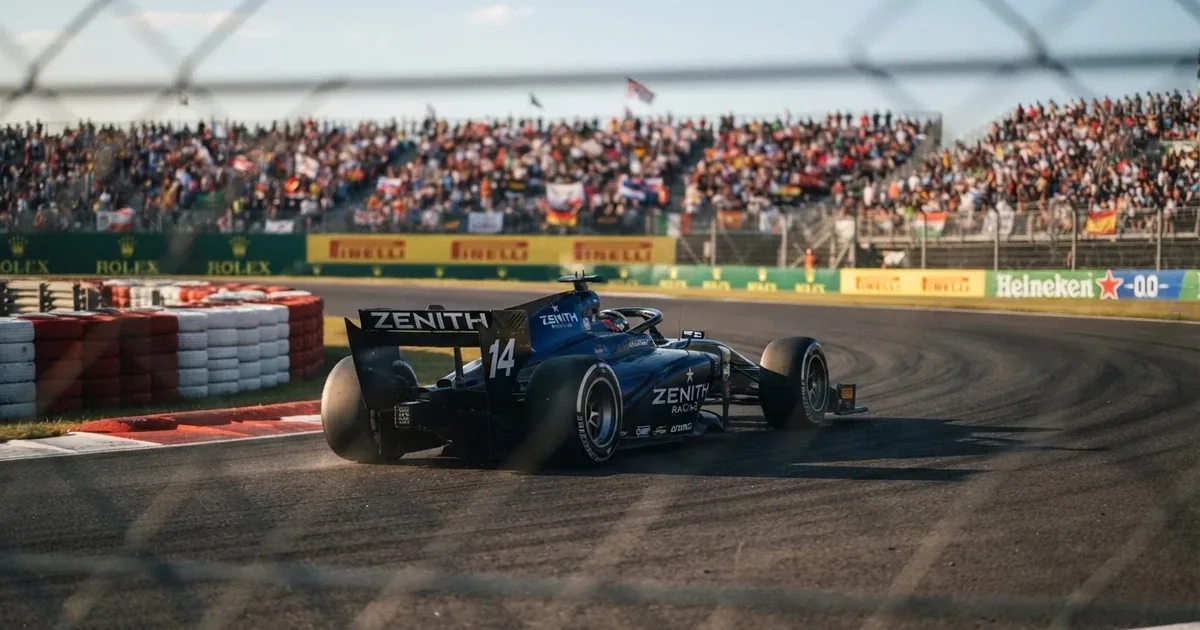
26 October 2026 — data current against TAB NZ’s published terms, the Racing Industry Act 2020 as amended in 2025, and the Department of Internal Affairs’ public statement on the prohibition.
Table of Contents
- The 2026 F1 calendar and what it changes for a bettor
- How F1 betting works in New Zealand in practice
- The two lawful New Zealand bookmakers for F1 — TAB and Betcha
- Offshore F1 bookmakers — what a New Zealand punter actually gets from them
- Where the lawful monopoly actually bites
- Bonuses, advertising and what the marketing actually costs
- What the player actually keeps on a winning F1 bet
- Responsible gambling in the lawful New Zealand F1 market
- What an F1 punter needs to read on the bookmaker’s own page
- Picking the right New Zealand option for what you actually bet on
- What is new in F1 for 2026 that the odds don’t yet reflect
- A worked comparison: the cost of a $50 head-to-head bet at 1.90 / 1.90
- Building a year-round F1 betting bankroll that does not drift
- Where to check TAB NZ’s terms before claiming any offer
- Frequently asked questions
The 2026 F1 calendar and what it changes for a bettor
The 2026 FIA Formula One World Championship is the 77th running of the World Championship. It runs from the Australian Grand Prix at Albert Park, Melbourne on 8 March 2026 to the Abu Dhabi Grand Prix at Yas Marina Circuit on 6 December 2026, covering 23 Grands Prix across 11 teams after the Saudi Arabian Grand Prix was cancelled from the original 24. Six events are sprint weekends: China, Miami, Canada, Britain, Netherlands and Singapore. Sprints give a different menu of bets than a standard grand prix, and they give two points-paying finishes inside one weekend, which is where a Same Game Multi gets its shape.

The technical reset changes how the racing reads. MGU-H is gone, MGU-K output rises from 160 bhp to 470 bhp (350 kW), and DRS gives way to active aerodynamics. Predicting the constructors’ pecking order early in a regulatory reset is harder than picking the same order late in a cycle, and that re-stating shows up in the betting market before the data catches up. Lando Norris enters 2026 as the reigning Drivers’ Champion. The team cost cap rose from $135M to $215M, which changes how durable a back-of-grid recovery is.
For a New Zealand punter the sporting shape is the same as for everyone else who watches F1. The cost shape is not: every price sits inside TAB NZ’s terms, TAB NZ’s margin, and TAB NZ’s product list, and the second lawful brand in the market is Betcha, which is also TAB NZ. Beyond those two, an F1 bet is taken by an offshore operator whose right to do so in New Zealand is the precise point of section 74AAA.
How F1 betting works in New Zealand in practice
The mechanics of an F1 bet look familiar if you have bet on any other sport, and they look unusual if you have not.

A win bet on a driver pays the stake times the decimal odds; decimal odds of 4.50 on Lando Norris to win the Japanese Grand Prix pay 4.5 times the stake if he wins, with the stake returned in the payout. A place bet pays if the driver finishes on the podium for most events, with reduced odds. Each-way betting splits a stake into a win part and a place part, doubling the bet cost and giving the punter a return on either outcome, which suits long-odds runners in the constructor market more than it suits short-priced favourites in the race winner market.
A Same Game Multi stacks two or more selections from one race into one bet slip; the prices multiply, a losing leg voids only itself on some bookmakers (TAB NZ’s policy is detailed in its terms, and a leg-by-leg void rule is the kind of small-print clause worth checking before you stack a multi), and an all-in-one losing leg voids the whole slip. Outrights run all season: Drivers’ Championship, Constructors’ Championship, race-by-race markets, qualifying top three, fastest lap, retirements, and head-to-head match-ups between team-mates when the bookmaker names them. Live betting on F1 is listed in TAB NZ’s apps; in-play markets tend to thin out when the safety car clusters the field because the probability of any one outcome collapses into the restart window.
The cost of every one of those bets is the margin. The bookmaker builds a margin into the prices so the implied probabilities of all outcomes add to more than 100%, and the difference is what the bookmaker keeps per unit bet across that market. A market quoted at 1.90 / 1.90 on a two-runner head-to-head keeps roughly 5.26% of every unit bet on that market, calculated as 1 − 1 / (1/1.90 + 1/1.90) = 1 − 0.9474 = 0.0526. That is the floor the margin sits at for those prices; one outcome of 1.85 / 1.95 keeps about 7.65% of every unit bet, calculated as 1 − 1 / (1/1.85 + 1/1.95) = 1 − 0.9235 = 0.0765. The shape is the same direction for every market in the F1 book. A market whose only two prices are 1.90 / 1.90 keeps 5% to 6% of every unit bet. The same calculation underpins winner, podium, head-to-head, fastest lap and qualifying markets; the legs of a Same Game Multi each carry the margin of their underlying market, and the combined margin is higher than any one of them alone because the bookmaker’s edge compounds across the legs.
That compounding is the part most punters skip past. A four-leg SGM does not keep 5% of your stake — it keeps roughly the product of four bookmaker edges, which lands closer to 20% on a typical F1 card.
The two lawful New Zealand bookmakers for F1 — TAB and Betcha
TAB and Betcha sit at the top of any F1 ranking for New Zealand readers, and they sit there for a reason nothing else in this market shares: they are the only operators the law lets take your bet. Both are brands of TAB NZ, run under Entain’s operating partnership (a 25-year agreement signed in 2023 that gives Entain a 50/50 share of gross profits, with at least $150m a year going to TAB NZ for the first five years, plus a one-off $100m payment to the racing sector). What separates them on the page is product and presentation, not the law behind them.
TAB (tab.co.nz)
TAB is the retail-till name New Zealanders grew up using, and its app simply carries the brand forward. The TAB NZ app covers horse and harness racing, rugby union and rugby league and other sports, pre-match and live, with F1 sitting inside the broader sportsbook. The product list inside TAB is the fullest of any lawful New Zealand option for racing and sports combined, and F1 benefits from that.
Pricing and margin on TAB’s F1 markets are TAB’s, and they are the lawful-market benchmark the rest of this page reads against. The TAB NZ app lists a 17+ App Store age rating while stating that customers must be 18 or over to bet, and the terms forbid underage betting under section 89 of the Racing Industry Act 2020. The safer-gambling tooling lives inside the account: deposit limits, time-outs and self-exclusion, all listed in the app, and a self-exclusion applies across TAB and Betcha together. The app’s F1 product is pre-match and in-play, with Trackside live race streaming for racing sports and in-app betting attached to the stream. Racing form, Blackbook and Jockey Challenge tools are racing-specific, but a punter who likes racing detail tends to be the same punter who likes F1 detail, and the design caters to that.
TAB’s payout methods and withdrawal time depend on the payment method, and the limits, deposit minimums and any fees live in TAB’s terms rather than in a statute. What TAB does do that offshore brands do not is run inside New Zealand’s harm-minimisation framework, pay the Problem Gambling Levy (0.74% under the current levy period), and give a player a New Zealand complaints path with the Department of Internal Affairs as the regulator in the background.
For the F1 punter whose bet has to be lawful, TAB is the baseline. It is the place the comparator prices live against. Against TAB’s product breadth a casino-only or esports-only site loses on F1 variety; against TAB’s lawful New Zealand status an offshore bookmaker loses on consumer protection. The narrower question — which of TAB and Betcha a punter opens first — comes down to which app the punter prefers to use through a 23-race season.
Betcha (betcha.co.nz)
Betcha is the newer of the two lawful brands, first released on 6 August 2024 and published on the New Zealand App Store by Entain New Zealand Limited. Betcha is positioned as the digital-first sibling: same wagering pool behind the scenes as TAB, younger product surface. Its sports coverage on the App Store listing includes rugby, NRL, MMA/UFC, NBA, NFL, tennis, cricket, football, motorsports and esports, plus horse, greyhound and harness racing.
For an F1 punter, Betcha offers the same Drivers’ Championship, race winner, podium, qualifying and head-to-head lines as TAB, with the same Entain back-end and the same TAB NZ licence behind them. Where Betcha intends to differentiate is in product polish: simplified bet-slip, the kind of streamlined wagering interface a digital-first user expects, and a younger promo cadence. The audience it suits is the punter who has not inherited TAB from a parent’s habit and wants the second lawful New Zealand app on their phone through a long F1 season.
For an F1 punter TAB and Betcha both do the job. The question is presentation, not law.
Offshore F1 bookmakers — what a New Zealand punter actually gets from them
| Brand | NZ Status | F1 & Sports Offer |
|---|---|---|
| TAB | Lawful | Racing and sports betting |
| Betcha | Lawful | Racing and sports betting |
| Roobet | Not licensed | Sports and casino |
| Spinbara | Not licensed | Sports and casino |
| Sportaza | Not licensed | Sports and casino |
| Thunderpick | Not licensed | Esports and sports |
| Rooster | Not licensed | Sports and casino |
| Glorion | Not licensed | Sports and casino |
| RoyalistPlay | Not licensed | Sports and casino |
| BetAlright | Not licensed | Sports and casino |
Eight of the ten brands on this comparison are not licensed to take bets from people in New Zealand. None of them carries a New Zealand licence, because New Zealand does not issue one beyond TAB NZ. The trade they offer is the same trade New Zealand punters had before the 2025 amendment, except the law under which they used to operate that trade is gone.
Every offshore brand on this list names a licence somewhere — Curaçao, Anjouan, Tobique — and every one of those licences gives no right to take bets from people in New Zealand. They sit outside the New Zealand harm-minimisation framework. The Department of Internal Affairs warns that overseas operators may be in jurisdictions with minimal consumer safeguards, may not return unspent credits and may not pay out large wins. With offshore brands a punt is on an operator that is breaking New Zealand law in doing business with the punter, with no New Zealand complaints route, no New Zealand regulator to escalate to, and the betting duty that such operators may pay into another jurisdiction is not a New Zealand authorisation. The only consistent rule across the offshore set is what the law says about them: the operator is on the wrong side of section 74AAA.
What follows is what each brand does, in product terms, for readers who already know the wider picture and want a single comparison to read against. None of these is presented as a lawful New Zealand option. None is presented as safe by default. Each is described for the product it carries, with that wider picture stated once and not repeated.
Roobet
Roobet runs a combined casino and sportsbook under a Curaçao licence (OGL/2024/687/0427), holder Raw Entertainment B.V., with terms requiring players to be 18 or older. The sportsbook lists soccer, basketball, tennis, Counter-Strike, FIFA, baseball, ice hockey, MMA and table tennis, and F1 fits inside the broader sports offering rather than sitting at its centre.
For a New Zealand F1 reader, Roobet’s interest is roughly zero. The brand does not specialise in motorsport, and the product list does not name F1. As an offshore operator without a New Zealand licence it carries the consumer-protection gap common to the set. The most useful comparison is to TAB: where TAB lists F1 inside a long racing and sports menu with a deep pool of NZ-specific tooling, Roobet lists F1 inside an international sportsbook without a New Zealand complaints route or a harm-minimisation framework this jurisdiction recognises.
Spinbara
Spinbara runs a first-deposit welcome structure (a casino-side first-deposit bonus and a separate sport crypto welcome bonus) on its English site and accepts a broader payments menu. The Curaçao licence (OGL/2024/687/0427) is the same one Roobet names; the difference is product mix.
For an F1 reader, Spinbara is a comparison point, not a destination. The product lines that read F1 are inside the sportsbook and are not named in the terms. The wider point is the welcome structure and how it costs a New Zealand punter: a sport welcome bonus looks generous on a deposit page and is paid for in turnover terms, and an offer inside a market the punter might use anyway is not free money. The full cost of an offer like this is its wagering requirement against the margin of the markets it can be cleared on, which is the standard offer-cost arithmetic in this market and the reason F1 odds sit where they do across operators.
Sportaza
Sportaza carries the broadest product surface of the offshore brands on this list: cash out before an event or market is finalised, a Bet Builder (one void leg voids the whole betslip), multiples, Asian lines, and interval markets in 1, 5, 10 or 15 minute ranges. The licence is Anjouan (ALSI-202606064-FI2), which is the offshore pattern familiar across this set and which gives no right to take bets from people in New Zealand.
For an F1 reader, Sportaza’s interest is product surface. A Bet Builder with a void-the-whole-slip rule on a single leg void is restrictive compared with operators that void only that leg on their own builders, and the cost of that restriction shows up at the bet-slip rather than the racing page. The numbers behind Sportaza’s product are its own house margin, and what makes that margin matter for an F1 punter is the same thing that makes any book’s margin matter: the lower the margin the higher the payout ratio on a winning market, and the higher the payout ratio the more the punter keeps from a winning weekend.
Thunderpick
Thunderpick is an esports-first operator covering CS2, League of Legends, Dota 2 and Valorant, with a sportsbook that lists a cash-out feature and markets from the Champions League to the NFL. The Curaçao licence (OGL/2024/677/0722) is held by Paloma Media B.V., and the brand sits outside the New Zealand framework the same way the rest of this set does.
For an F1 reader, Thunderpick is esports first and the F1 offering is part of a broader sports menu rather than a featured one. The product the punter comes for here is the niche product rather than the marquee motorsport product. The comparison the punter makes against TAB is the same one the rest of the offshore set invites: brand depth against lawful-market standing.
Rooster
Rooster’s sportsbook has Live, Sports Promotions, Results, Schedule, E-sports and Predictions sections, and shows odds in six formats. The Tobique licence (0000002) is held by Novatrix SRL, and the brand lists no F1 specialisation in the home-page material.
For an F1 reader, Rooster is comparable to the rest of the offshore set on product breadth, with a wider odds-format menu and a Tobique licence that does not give a New Zealand authorisation. The product surface is what Roobet’s is at this distance: enough to read a bet slip, not enough to specialise in a 23-race F1 calendar.
Glorion
Glorion offers pre-match and live betting, virtual sports, horse racing and esports, with markets grouped into popular, niche, indoor and outdoor sports plus entertainment events such as award shows and elections. The licence is not named in the home-page material, which is the first consumer-protection flag against any book that does not name its licence in plain English at the top of its terms.
For an F1 reader, Glorion is a comparison point on product breadth. The wider point on a brand that does not name its licence is the same consumer-protection gap the rest of this set sits in: the absence of a clear licence on the home page is a thing a punter reads before they enter the cashier, not afterwards.
RoyalistPlay
RoyalistPlay’s sportsbook offers live betting, sports promotions, results and a schedule, with football, basketball, tennis, handball, ice hockey, volleyball and table tennis among the top sports, plus separate e-sports and Predictions sections. The Tobique licence (0000002) is held by Novatrix SRL.
For an F1 reader, RoyalistPlay’s product is the same shape as Rooster’s, with a Tobique licence and a New Zealand consumer-protection gap. Whether the F1 offering is competitive against TAB’s F1 offering is a question the F1-specific menu answers, and a menu comparison is more direct than a paragraph re-stating it.
BetAlright
BetAlright’s sportsbook covers football, tennis, table tennis, basketball, ice hockey, American football and baseball, with Live Betting and Virtual Sports sections. The licence is not named in the home-page material.
For an F1 reader, BetAlright is the narrowest F1 offering of the offshore set on the named sports list. F1 does not appear in the named sports menu. The product is broad on US and European staples and thin where an F1 punter’s interest goes. The consumer-protection gap to New Zealand is the same as the rest of this set.
Where the lawful monopoly actually bites
The amendment is narrower than first appearances suggest, and wider than second appearances suggest. Narrower: it applies to racing and sports betting only. The Online Casino Gambling Act 2026 licenses online casino gambling as a separate permit, so a casino-only product (pokies, table games, live casino) does not fall under section 74AAA, and TAB New Zealand holding the right to apply for a casino licence does not extend the betting monopoly to casino products. Wider: the Racing Industry Act 2020 puts the prohibition on the operator, not on the punter. Section 19(4) of the Gambling Act 2003, inserted in 2025, says an individual may not be convicted for placing a bet with an offshore betting operator in breach of section 74AAA, so the player side of a punt with an offshore brand does not draw a published New Zealand penalty. The framing that follows from this — operator is unlawful, player is unwritten-of — is the framing a punter reads against the operator’s offer.
Greyhound racing closes in stages from 1 August 2026, and from that date offshore operators may not take bets on greyhound races either. F1 is unaffected by the closure; the relevant sports-betting prohibition has run since 28 June 2025.
The Department of Internal Affairs named TAB NZ as the sole lawful provider and told unlicensed providers to withdraw with immediate effect. The penalty for breaching section 74AAA is not stated in the section; no prosecution of an offshore bookmaker was found. New Zealand does not block the offshore sites; the law puts the liability on the operator and the consumer-protection gap on the punter. TAB NZ carries the lawful-market baseline; everything else in this comparison operates outside it. The shape of that — lawful option with full New Zealand harm-minimisation framework, regulator oversight and complaints route; offshore option that breaks section 74AAA in serving New Zealand punters, no New Zealand complaints route, and DIA’s stated risks — is the framing this page returns to and never drifts from.
Bonuses, advertising and what the marketing actually costs
A welcome bonus looks like a discount on the deposit; the discount is paid for in turnover, and the turnover is paid for in the margin of the markets the offer is cleared on. A 100% first-deposit match with a 10x turnover on the bonus amount on F1 markets at 1.90 / 1.90 margins takes more from the punter in expected cost than the bonus is worth on average, which is why the operator offers it. TAB NZ runs its own bonus-bets and boosted-odds promotions; no New Zealand rule on bonus size or wagering terms was found, so the comparison is product-by-product rather than rule-by-rule.
The Advertising Standards Authority’s Gambling Advertising Code applies to betting advertisements in New Zealand: ads must not target children under 14 or young people 14 to under 18, judged by context, appeal and expected audience (25% or more of the audience is significant where accurate data exists), must not encourage harm, and must be truthful with terms available. No New Zealand equivalent of a whistle-to-whistle advertising ban for betting was found. The page describes what an offer is worth and not how it is claimed; no bonus code, free-bet code, voucher code, or sign-up link appears anywhere on it.
What the player actually keeps on a winning F1 bet
A winning singles bet pays the stake times the decimal odds. With a stake of $10 on a driver at decimal odds of 4.50 the return is $45, with a $35 net profit. With a stake of $50 on a head-to-head at 1.90 / 1.90 the return is $95, with a $45 net profit. The stake is returned as part of the payout. A Same Game Multi with three winning legs at 1.80, 2.10 and 3.40 carries combined odds of roughly 12.85 (the product of the three legs); a $10 stake at those combined odds returns about $128.50 with a $118.50 net profit. An accumulator with one losing leg pays nothing; with a same-game-multi at a bookmaker that voids only the losing leg, that leg’s stake is returned and the rest of the slip pays as a smaller accumulator.
The tax side of a winning recreational F1 bet is generally neutral. Inland Revenue guidance says recreational gambling winnings are not taxable, and prize money from TAB horse, dog and trotting races is not taxable. A punter who bets as a business is a different case, and the general advice points to Inland Revenue or an accountant rather than to this page. The tax arithmetic that does apply is on the operator side: TAB NZ pays the Problem Gambling Levy (0.74%); overseas operators supplying New Zealand residents pay online gambling duty (12% of profits since 1 July 2024, 16% from 1 January 2027), but a duty being payable does not make an offer lawful, and the inference does not survive a reread.
Responsible gambling in the lawful New Zealand F1 market
TAB NZ lists three safer-gambling tools inside its app: deposit limits, time-outs and self-exclusion. A self-exclusion applies across TAB and Betcha together, which matters because a punter who self-excludes cannot simply move to the second app and continue. Help sits behind the app: the free New Zealand Gambling Helpline on 0800 654 655, with a text line on 8006, and Safer Gambling Aotearoa for counselling and support services. The helpline is the same three digits a punter who reads this page for the F1 odds remembers when they read another section for the gambling-harm tools.
Underage betting is forbidden under section 89 of the Racing Industry Act 2020. The TAB NZ app carries a 17+ App Store age rating and states that customers must be 18 or over to bet. Account opening at TAB NZ requires a verified New Zealand address and ID. The minimum age to bet is 18; land-based casinos are 20 — the two are separate permits with separate rules.
There is no single national online-betting exclusion register in New Zealand. The register the 2026 online casino law introduces is for online casinos only, and does not extend to TAB NZ betting. The Problem Gambling Levy, at 0.74% from 1 July 2025 to 30 June 2028, funds harm-minimisation work via the Ministry of Health. Nothing in this market suggests a punter needs to use a single exclusion tool and consider the wider picture closed; the deposit limit, the time-out, and the self-exclusion are independent tools and the choice between them is a function of what the punter wants to change.
What an F1 punter needs to read on the bookmaker’s own page
The bookmaker’s own terms page is where the wagering multiple, the minimum price, the deadline and the cap on free-bet winnings sit, and those are the four figures that decide what an offer costs in dollars. The margin is not on the terms page; it sits inside every price on the market list and is the floor every offer arithmetic starts from. The lawful New Zealand options are named at the top of this page. The offshore brands sit behind them on product breadth, ahead on occasion-specific bonuses, and behind them on New Zealand consumer protection.
Three things the bookmaker’s terms always read on:
- The minimum price at which a bonus-bet or boosted-odds leg counts. A 1.50 minimum is not the same as a 1.80 minimum. A reader who bets on a 1.40 qualifying leg wastes the offer.
- The turnover requirement on a deposit bonus, stated as a multiple of the bonus base, with the bonus base named (bonus alone, or bonus plus deposit) so the actual dollar turnover is clear. A 10x bonus-only turnover is roughly half the dollar turnover of a 10x bonus-plus-deposit turnover of the same percentage.
- The cap on free-bet winnings, stated in dollars. A $50 free bet with a $200 cap on winnings caps the upside of the offer; an uncapped free bet of the same face value costs the book more and tends to come with a tighter minimum price.
Picking the right New Zealand option for what you actually bet on
F1 betting is a sport with a long season and a narrow margins story. The 2026 championship runs nine months across 23 races, with six sprints giving one-each doubled-up weekends. A punter who puts a $20 win bet on every race weekend at TAB is laying about $460 across a season, getting the lawful-market standing of TAB NZ and a margin inside every price. A punter who runs four-leg Same Game Multis at an offshore bookmaker is laying the same stake total and losing roughly four times the per-race margin to bookmaker edge.
Three reader situations frame the choice:
- A New Zealand-based punter whose bet has to be lawful opens TAB or Betcha. The choice between the two is brand preference.
- A New Zealand-based punter looking for a sportsbook product surface broader than TAB’s — a deeper live-betting menu, an Asian line, a feature build they cannot find in TAB — buys that surface at the price of breaking section 74AAA on the operator side, with no New Zealand complaints route and DIA’s stated consumer-protection risks. That trade is the trade the offshore set names, and the page names it once.
- A New Zealand-based punter who wants a niche market (esports, virtual, a feature build) without an F1 specialisation looks at the niche set first and the F1 menu second. The product comparison is sharper that way.
What is new in F1 for 2026 that the odds don’t yet reflect
Three features of the 2026 reset are still bedding in through the early races, and the betting markets price what they have already seen. MGU-K output triples from 160 bhp to 470 bhp, the MGU-H is gone, and DRS gives way to active aerodynamics. The team cost cap rises from $135M to $215M. A team whose 2025 form was held back by an older power-unit design gets a fresh starting point; a team whose 2025 dominance was a power-unit dominance gets a different kind of 2026 dominance test. The early odds reflect 2025 qualifying pace with a residual weighting toward the engine rule, and they rebalance as the new technical picture sharpens. Drivers’ Championship outrights look long on teams whose pace reset in pre-season testing; Constructors’ Championship lines look short on teams whose engine programme delivered more than the chassis. The price shifts land where the data lands, and a punter who reads race-by-race form carries that read into the next price.
Sprint weekends put two separate point-paying races inside one event, and that structure gives a Same Game Multi two chances to win and a sliding leg count if one of them falls apart. A four-leg Sprint SGM has twice the underly-ing race weekends of a standard four-leg SGM and not twice the winning odds — the price discount is where the bookmaker edges the product.
A worked comparison: the cost of a $50 head-to-head bet at 1.90 / 1.90
A two-runner head-to-head at decimal odds of 1.90 / 1.90 is the simplest price the F1 book offers. The implied probabilities on each side add to 1/1.90 + 1/1.90 = 1.0526, so the bookmaker pays out 1 / 1.0526 = 0.95 of every dollar staked on that market, across both outcomes, and keeps 5.26% of every dollar. A $50 head-to-head bet at those prices pays a $45 net profit on the winning outcome and zeros the stake on the losing outcome; the expected net across both outcomes at 50/50 true probability is 0.50 × $45 + 0.50 × -$50 = -$2.50, which is the 5% cost as a dollar figure. That is what the margin costs in expectation on a market quoted at those prices, and it is the floor the rest of the F1 market sits on.
A market quoted at 1.85 / 1.95 carries 1/1.85 + 1/1.95 = 1.0825 of implied probability, so the bookmaker pays 0.9235 of every dollar and keeps 7.65%, and a $50 head-to-head costs about $3.83 in expected loss. The 1.90 / 1.90 quote is the cheaper side of the spread; the 1.85 / 1.95 quote is the dearer side; the difference between them is bigger than the marketing line “best odds guaranteed” suggests, because the better price pays roughly $2.50 more on the same stake across an evenly likely pair of outcomes.
A four-leg Same Game Multi with combined decimal odds of 12.85, each leg quoted at 1.90 / 1.90-style edges of about 5% per leg, carries a compounded bookmaker edge of 1 – (0.95)^4 = 0.185, or about 18.5%, which is roughly $9.25 of every $50 staked. That is the cost figure most F1 punters do not run on their own slips, and it is the figure that explains why the same bet that feels like a small punt at the betting-window is the most expensive bet on the card by margin.
These three figures — 5.26%, 7.65%, 18.5% — are the cost shape of an F1 bet at three different points on the card. None is a quoted price; all are illustrative and stated as a band with the condition (the leg price assumed).
Building a year-round F1 betting bankroll that does not drift
Bankroll discipline is not a strategy; it is a way of making the bets whose costs are known feel like the bets whose wins are known. Three rules of thumb carry from pre-season testing to Abu Dhabi:
- Stake sizing before the race weekend. A stake-per-race figure set in dollars, not percentages, keeps the punter on a steady dollar loss curve as the season runs.
- One qualifying bet per race weekend as the discipline line. Two qualifying bets per weekend doubles the variance and does not double the bank.
- One wagering multiple on any bonus, applied to the bonus alone or the bonus plus deposit depending on which the offer names, read against the offer’s minimum price before the offer is claimed.
The wider rule sits above the three: the lawful-market option is the default for a New Zealand punter whose bet has to be lawful, and the offshore option is the trade the punter makes when they want a feature they cannot find in TAB and they have read the terms of the trade.
Where to check TAB NZ’s terms before claiming any offer
The bookmaker’s own terms page is the only place the wagering multiple, minimum price, deadline and cap on free-bet winnings are stated precisely; research carries the market shape and the law, not the terms page itself. The TAB and Betcha apps list promotions inside the betting account. The Racing Industry Act 2020 is the primary statute, with the Racing Industry Amendment Act 2025 inserting section 74AAA. The Department of Internal Affairs’ public statement on the prohibition is the regulator’s own framing. The Online Casino Gambling Act 2026 is the casino-side permit law and does not extend the betting monopoly. Inland Revenue’s guidance on gambling winnings is the tax side for the punter.
Frequently asked questions
Can you bet on F1 in New Zealand?
Formula 1 is one of the sports a New Zealand punter can bet on, and the lawful path runs through TAB NZ’s two online brands. Both carry F1 markets inside a broader sports book, and the wider racing and sports portfolio is a TAB NZ monopoly under section 74AAA of the Racing Industry Act 2020 as amended in 2025. The 2026 championship carries 23 races across 11 teams; a Same Game Multi on a single grand prix stacks two or more selections from that race into one slip, and the combined odds multiply across the legs of the multi.
Can you bet on F1 races?
Race-by-race markets are the core of the F1 book. Race winner, podium finish, head-to-head, qualifying top three, fastest lap and Same Game Multi are the markets the F1 book offers on a standard weekend. Sprint weekends run twice the point-paying races inside one event. Outrights on the Drivers’ Championship and the Constructors’ Championship run all season. Margin and offer arithmetic apply the same way they apply across the rest of the TAB NZ sports book; the specific lines reset with the season and the weekend.
Can you bet on Formula 1?
The lawful New Zealand path through TAB NZ is the answer a New Zealand resident gets. The amendment to the Racing Industry Act that took effect on 28 June 2025 placed the betting prohibition on the operator; the player side is not framed as a published penalty under section 19(4) of the Gambling Act 2003. That is the operator-side risk and the absent player-side penalty. TAB NZ and Betcha are the two lawful online brands, run by Entain under a 25-year partnership signed in 2023.
Which bookmaker may lawfully take sports and racing bets in New Zealand?
TAB NZ, through its TAB and Betcha brands, is the only provider that may lawfully take online sports and racing bets from a person in New Zealand. The Racing Industry Amendment Act 2025 inserted section 74AAA into the Racing Industry Act 2020 and the change took effect on 28 June 2025. The Department of Internal Affairs told unlicensed providers to withdraw with immediate effect and confirmed TAB NZ as the sole lawful operator for online sports and racing bets. The Online Casino Gambling Act 2026 does not extend this monopoly to online casino products.
How is the return on a bet worked out from the stake and the odds?
A winning singles bet pays the stake times the decimal odds in a return that includes the stake; the net profit is the stake times the decimal odds minus one. A stake of $10 at decimal odds of 4.50 pays $45, with $35 of net profit. A multi multiplies the odds across the winning legs into a combined price; a $10 stake at combined odds of 12.85 pays $128.50, with $118.50 of net profit. The stake is part of the payout; the dollar return on a stake of $1 at decimal odds of $1.50 is $1.50.
What is the bookmaker’s margin and how can it be seen in the odds?
The bookmaker’s margin is the share of every dollar bet on a market that the bookmaker keeps on average across all outcomes. On a two-runner market at 1.90 / 1.90, the implied probabilities add to 1.0526, so 5.26% is the margin. A market at 1.85 / 1.95 carries a margin of 7.65%. The margin is what the bookmaker keeps, and the rest is the payout share; the two always sum to 100%. The compounding effect across the legs of a multi is what makes a multi a more expensive bet per dollar staked than a single.
Published by the Nzgridironbets team.